Tag: MPLS

  • Модель сетевого взаимодействия OSI – Open Systems Interconnection

    Модель сетевого взаимодействия OSI – Open Systems Interconnection

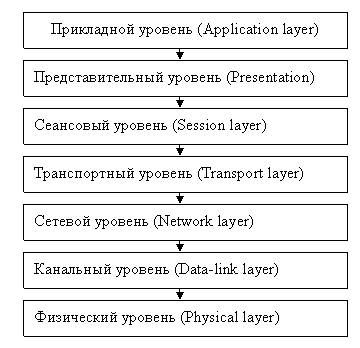
    Модель ISO/ OSI предполагает, что все сетевые приложения можно подразделить на семь уровней, для каждого из которых созданы свои стандарты  и общие модели. В результате задача сетевого взаимодействия делиться на меньшие и более легкие задачи, обеспечивается совместимость между продуктами разных производителей и упрощается разработка приложений за счёт создания отдельных уровней и использования уже существующих реализаций.

    Open Systems Interconnection - Модель OSI

    Теоретически, каждый уровень должен взаимодействовать с аналогичным уровнем удаленного компьютера. На практике каждый из них, за исключением физического, взаимодействует с выше – и нижележащими уровнями – представляет услуги вышележащему и пользуется услугами нижележащего. В реальной ситуации на одном компьютере независимо друг от друга иногда выполняется несколько реализаций одного уровня. Например, компьютер может иметь несколько сетевых адаптеров стандарта Ethernet или адаптеры стандартов Ethernet и Token-Ring и.т.д.

    Физический уровень
    Физический уровень описывает физические свойства (например, электромеханические характеристики) среды и сигналов, переносящих информацию. Это физические характеристики кабелей и разъемов, уровни напряжений и электрического сопротивления и.т.д., в том числе, например, спецификация кабеля «неэкранированная витая пара» (unshielded twisted pairUTP)
      
    Канальный уровень
    Канальный уровень обеспечивает перенос данных по физической среде. Он поделен на два подуровня: управления логическим каналом (logical link controlLLC) и управления доступом к среде (media access controlMAC). Такое деление позволяет одному уровнюLLC использовать различные реализации уровня MAC. Уровень MAC работает с применяемым в Ethernet и TokenRing физическими адресами, которые «вшиты» в сетевые адаптеры их производителями. Следует различать физические и логические (например, IP) адреса. С последним работает сетевой уровень.
    Сетевой уровень
    В отличии от канального уровня, имеющего дело с физическими адресами, сетевой уровень работает с логическими адресами. Он обеспечивает подключение и маршрутизацию между двумя узлами сети. Сетевой уровень предоставляет транспортному уровню услуги с установлением соединения (connectionoriented), например Х.25, или без установления такового (connectionless) например IP (internetprotocol). Одна из основных функций сетевого уровня – маршрутизация.
    К протоколам сетевого уровня относиться IP и ICMP (Internet Control Massage Protocol).
    Транспортный уровень
    Транспортный уровень предоставляет услуги, аналогично услугам сетевого уровня. Надежность гарантируют лишь некоторые (не все) реализации сетевых уровней, поэтому ее относят к числу функций, выполняемых транспортным уровнем. Транспортный уровень должен существовать хотя бы потому, что иногда все три нижних уровня (физический, канальный и сетевой) предоставляет оператор услуг связи. В этом случае, используя соответствующий протокол транспортного уровня, потребитель услуг может обеспечить требуемую надежность услуг. TCP (Transmission Control Protocol) – широко распространенный протокол транспортного уровня.
    Сеансовый уровень
    Сеансовый уровень обеспечивает установление и разрыв сеансов, и управление ими. Сеанс – это логическое соединение между двумя конечными пунктами. Наилучший пример этой модели – телефонный звонок. При наборе номера Вы устанавливаете логическое соединение, в результате на другом конце провода звонит телефон. Когда один из собеседников говорит «аллё», начинается передача данных. После того как один из абонентов вешает трубку, телефонная компания выполняет некоторые действия для разрыва соединения. Сеансовый уровень следит также за очередностью передачи данных. Эту функцию называют «управление диалогом» (dialog management). Вот примеры протоколов сеансового, представительного и прикладного уровней –SMTP (Simple Mail Transfer Protocol), FTP (File Transfer Protocol) и Telnet.
    Представительный уровень
    Представительный уровень позволяет двум стекам протоколов «договариваться» о синтаксисе (представлении) передаваемых друг другу данных. Поскольку гарантий одинакового представления информации нет, то этот уровень при необходимости переводит данные из одного вида в другой.
      
    Прикладной уровень
    Прикладной уровень – высший в модели ISOOSI. На этом уровне выполняться конкретные приложения, которые пользуются услугами представительного уровня (и косвенно – всех остальных). Это может быть обмен электронной почтой, пересылка файлов и любое другое сетевое приложение.
    Таблица 1. модель ISOOSI и некоторые протоколы соответствующих уровней.
    ПРИКЛАДНОЙ УРОВЕНЬ
    SMTP (Simple Mail Transfer Protocol), FTP (File Transfer Protocol)
    ПРЕДСТАВИТЕЛЬНЫЙ УРОВЕНЬ
    СЕАНСОВЫ УРОВЕНЬ
    ТРАНСПОРТНЫЙ УРОВЕНЬ
    TCP AND UDP
    СЕТЕВОЙ УРОВЕНЬ
    IP, ICMP, ARP
    КАНАЛЬНЫЙ УРОВЕНЬ
    IEEE 802.3
    Ethernet
    ФИЗИЧЕСКИЙ УРОВЕНЬ
      
  • Скачать CiscoWorks • Скачать Cisco Prime LAN Management Solution 4.1 для Windows

    Скачать CiscoWorks • Скачать Cisco Prime LAN Management Solution 4.1 для Windows

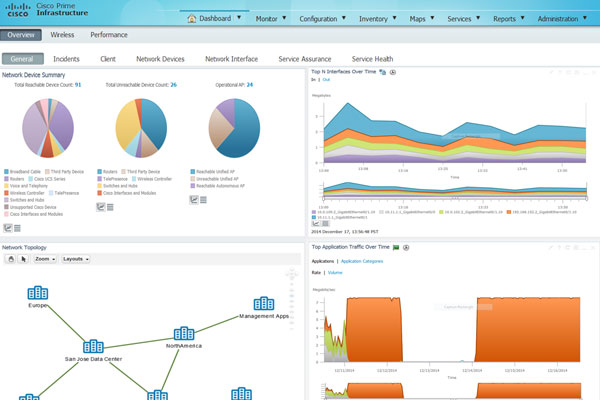
    Пакет CiscoWorks LAN Management Solution (LMS) содержит набор средств управления, необходимых для упрощения развертывания, администрирования, мониторинга и диагностики различных кампусных инфраструктур от Cisco.

    CiscoWorks LAN Management Solution

    Используя общие централизованные системы и сведения о сети, CiscoWorks LAN Management Solution предоставляет уникальный набор функций, позволяющих снизить время развертывания сети и расходы на администрирование.

    Основные свойства Cisco LMS:

    • Надежный набор средств уровня 2 для обнаружения устройств и подключений, детализированной визуализации топологии, настройки услуг уровня 2 и отслеживание оконечных станций, облегчающее настройку, управление и понимание физической и логической сетевой инфраструктуры.
    • Представление сетевых устройств на основе графического пользовательского интерфейса с отображением в реальном времени динамических данных о состоянии позволяет упростить диагностику и устранение неисправностей устройств.
    • Обнаружение неисправностей в реальном времени, функции анализа и отчета, использующие подробные сведения об устройствах и правила поиска неисправностей, основанных на лучших методах компании Cisco.
    • Упрощенные задачи администрирования, требующие меньших затрат времени, и централизованное управление сетью с помощью управления заменой устройств, сетевой конфигурацией и образами программного обеспечения, доступность сети и анализ неисправностей.
    Cisco prime

    CiscoWorks LMS состоит из следующих программных компонентов:

    • CiscoWorks Common Services — базовая платформа, осуществляющая общее управление интеграцией со сторонними системами сетевого управления, контроль административного доступа и сервисами для всего семейства решений CiscoWorks.
    • CiscoWorks LMS Portal — собственно, CMS сайта.
    • CiscoWorks Assistant — появился с версии 3.0, представляет собой набор визардов для первичной настройки компонентов.
    • Resource Manager Essentials (RME) — для управления критичными сетевыми ресурсами через Интернет с использованием web-интерфейса. Предоставляет набор инструментов для поиска и устранения неисправностей в сети, сбора детализированных отчетов, централизованного обновления программного обеспечения и конфигураций устройств, управления и конфигурации VPN, CallManager и др.
    • Internet Performance Monitor (IPM) — для анализа, оптимизации производительности и отладки неисправностей сетевых соединений на основе Cisco IP SLA.
    • CiscoView — графическое средство управления устройствами.
    • MiniRMON — инструмент для работы с RMON и RMON2.
    • Campus Manager (CM) — для обнаружения и управления L2/L3 устройствми, конфигурирования и управления VLAN и ATM LANE, а также определения подключения пользователей и IP телефонов.
    • Device Fault Manager (DFM) — обеспечивает обнаружение и определение причин сбоев сетевого оборудования в режиме реального времени.
    • Virtual Network Management (VNM) — появился с версии 3.2, занимается визуализацией топологии виртуальных сетей и их диагностикой, VRF.
    • Health and Utilization Monitor (HUM) — появился с версии 3.0.1, идёт как Add-On, требует отдельной лицензии. занимается сбором, отображением и мониторингом параметров производительности, уведомлением о превышении пороговых значений. Поддерживает только cisco-устройства, может мониторить до 1000 устройств.

    Все эти компоненты имеют свою нумерацию в рамках конкретной версии LMS, скачать Cisco Prime LAN Management Solution 4.1 для Windows

  • Celer Bridge incident analysis or why the BGP hijacks still having success

    Celer Bridge incident analysis or why the BGP hijacks still having success

     On 17 August 2022, a BGP spoofer was able to steal approximately USD 235,000 in cryptocurrency by employing a BGP hijack against the Celer Bridge, a service that allows users to convert between cryptocurrencies.

    In this blog post, I discuss this and previous infrastructure attacks against cryptocurrency services. While these episodes revolve around the theft of cryptocurrency, the underlying attacks hold lessons for securing the BGP routing of any organization that conducts business on the Internet.

    The BGP hijack of Celer Bridge

    In a detailed blog post earlier this month, the threat intelligence team from Coinbase explained how the attack went down (Note: Coinbase was not the target of the attack). In short, the attacker used a BGP hijack to gain control of a portion of Amazon’s IP address space.

    Doing so allowed it to impersonate a part of the Celer Bridge infrastructure, which was hosted by Amazon, and issue malicious smart contracts. These ‘phishing contracts’ stole the victim’s assets by redirecting them to the attacker’s wallet.

    To ensure the BGP hijack would be successful, the attacker needed to make certain its malicious BGP announcements wouldn’t get filtered by an upstream network by taking two steps. First, it managed to insert bogus route objects (shown below) for QuickhostUK in AltDB, a free alternative to the IRR databases managed by RADB and the five RIRs. At this time, it is unclear whether QuickhostUK was also a victim of this attack.

    irrd.log-20220817.gz:31106270-ADD 96126

    irrd.log-20220817.gz:31106280-

    irrd.log-20220817.gz:31106281-as-set:     AS-SET209243

    irrd.log-20220817.gz:31106306-descr:      quickhost set

    irrd.log-20220817.gz:31106332-members:    AS209243, AS16509

    irrd.log-20220817.gz:31106362:mnt-by:     MAINT-QUICKHOSTUK

    irrd.log-20220817.gz:31106392-changed:    crussell()quickhostuk net 20220816

    irrd.log-20220817.gz:31106438-source:     ALTDB

    irrd.log-20220817.gz:31147549-ADD 96127

    irrd.log-20220817.gz:31147559-

    irrd.log-20220817.gz:31147560-route:      44.235.216.0/24

    irrd.log-20220817.gz:31147588-descr:      route

    irrd.log-20220817.gz:31147606-origin:     AS16509

    irrd.log-20220817.gz:31147626:mnt-by:     MAINT-QUICKHOSTUK

    irrd.log-20220817.gz:31147656-changed:    crussell()quickhostuk net 20220816

    irrd.log-20220817.gz:31147702-source:     ALTDB

    Credit: Siyuan Miao of Misaka on NANOG list

    Since network service providers build their route filters using these IRR databases, this step was necessary to ensure upstream networks wouldn’t filter the bogus announcements coming from QuickhostUK.

    Secondly, the attacker altered the AS-PATH of the route so that it appears to be originated by an Amazon ASN (specifically AS14618). This also caused the route to be evaluated as RPKI-valid; more on that later.

    After the hijack in August, I tweeted the following Kentik BGP visualization showing the propagation of this malicious route. The upper portion shows 44.235.216.0/24 appearing with an origin of AS14618 (in green) at 19:39 UTC and quickly becoming globally routed. It was withdrawn at 20:22 UTC but returned again at 20:38, 20:54, and 21:30 before being withdrawn for good at 22:07 UTC.

    Kentik BFP Monitor’s view of the Amazon BGP hijack

    Amazon didn’t begin announcing this identical /24 until 23:07 UTC (in purple), an hour after the last hijack was finished and more than three hours after the hijacks began. According to Coinbase’s timeline, victims had cryptocurrency stolen in separate events between 19:51 and 21:49 UTC.

    Previous BGP hijacks against cryptocurrencies

    The Celer Bridge attack wasn’t the first time that a cryptocurrency service was targeted using a BGP hijack. In April 2018, Amazon’s authoritative DNS service, the former Route 53, was hijacked in order to redirect certain DNS queries to an imposter DNS service, as illustrated below.

    Amazon’s authoritative DNS service was hijacked to redirect certain DNS queries to an imposter DNS service, in April 2018

    The imposter authoritative DNS server returned bogus responses for myetherwallet.com, misdirecting users to an imposter version of MyEtherWallet’s website. When users logged into their accounts (after clicking past the certificate error, ∗sigh∗), the cryptocurrency was drained from their accounts.

    Within a couple of months of this incident, Amazon had published ROAs for their routes including those of its authoritative DNS service. This move enabled RPKI ROV to help offer some protection against such an attack in the future.

    Since public DNS services like Google DNS peer directly with Amazon and reject RPKI-invalids, it would be difficult, if not impossible, to fool Google DNS like this again. If an attacker surreptitiously appended an Amazon ASN to the AS-PATH of its hijack route in order to render it RPKI-valid, it would be unlikely to be selected over the legitimate route from Amazon because of its longer AS-PATH length.

    The BGP hijack against Amazon was not to be the last to target cryptocurrency.

    Earlier this year there was another incident that involved the manipulation of BGP to target a cryptocurrency service. Attackers were able to make off with over USD 2 million in cryptocurrency by employing a BGP hijack against KLAYswap, an online cryptocurrency exchange based in South Korea.

    Henry Birge-Lee and his colleagues at Princeton authored an excellent post on this incident. In this incident, the attackers went after the users of the KLAYswap cryptocurrency exchange by performing a BGP hijack of the IP space of a South Korean hosting provider (Kakao), as illustrated below.

    BGP hijack of Kakao’s IP space. Image credit Henry Birge-Lee

    This is because Kakao was hosting a javascript library that was loaded when users were on the KLAYswap platform. The BGP hijack enabled the attackers to impersonate Kakao and return a malicious version of this library redirecting user transactions to destinations controlled by the attackers.

    So what can be done to protect against BGP hijacks?

    While the incidents discussed above all involved the targeting of cryptocurrency services, the underlying issues are universal and can affect any organization that uses Internet-based services. In order to safeguard against attacks like these, BGP and DNS monitoring need to play a central role in your monitoring strategy. Additionally, strict RPKI configuration can also increase the difficulty for someone to hijack your routes, as I will explain.

    BGP and DNS monitoring

    DNS monitoring exists for the scenario that unfolded with MyEtherWallet in 2018. It uses agents around the world to check that queries for a specified domain return expected results. If a response contains something other than what was expected, it will fire off an alert.

    In the case of last month’s Celer Bridge attack, BGP monitoring could have alerted that a new /24 of Amazon address space was being announced, although the forged Amazon origin may have caused it to appear legitimate.

    However, when this new /24 appeared with an unexpected upstream of AS209243 (Quickhost), that should have triggered an alert drawing attention to this anomaly. The key detail here that would have distinguished this alert from the appearance of just another peer of Amazon would have been that the new upstream was seen by 100% of BGP vantage points. In other words, this new Amazon prefix was getting exclusively transited by this relatively unknown hosting provider. That should have raised some eyebrows among the Amazon NetOps team.

    RPKI ROV

    Amazon had a ROA for the prefix that was hijacked, so why didn’t RPKI ROV help here? It is important to first emphasize that RPKI ROV is intended to limit the impact of inadvertent or accidental hijacks due to routing leaks or misconfigurations. This is because ROV alone cannot prevent a ‘determined adversary’ from forging the origin in the AS-PATH, rendering a malicious hijack RPKI-valid.

    Having said that, it could have still helped if the ROA were set up differently. As it stands, the ROA for the address space in question is quite liberal. Basically, three different Amazon ASNs (16509, 8987, and 14618) can all announce parts of this address space with prefixes ranging in size from a /10 all the way down to a /24. See the output of the Routinator web UI, as shown in figure 4.

    Validation results for 44.235.216.0/24 - AS16509 via the Routinator web UI

    An alternative approach to ROA creation would be to do what other networks such as Cloudflare and Comcast have done — set the origin and maximum prefix length to be identical to how the prefix is routed. While this approach incurs an overhead cost of needing to update a ROA every time a route is modified, it also leaves little room for alternate versions of the route to come into circulation. Another consideration is the propagation time of the RPKI system itself — changes to ROAs take time to propagate around the world and networks only periodically update their RPKI data.

    In its blog post following the June 2019 routing leak by Allegheny Technologies, Cloudflare made the argument that had Verizon deployed RPKI ROV and had been rejecting RPKI-invalid routes, the leak would not have circulated and the impact would have been minimal. As I discussed in my talk at NANOG 78 in February 2020, this statement is only true because the maximum prefix lengths in Cloudflare’s ROAs matched the prefix lengths of their routes. This is not true of many ROAs, including Amazon’s.

    At NANOG 84 earlier this year, Comcast presented the story of how they deployed RPKI ROV on their network. In the Q&A, they confirmed that they adopted a strategy of using automation to maintain exact matches of maximum prefix lengths in their ROAs to avoid this route optimizer leak scenario.

    Had Amazon created a ROA specifically for 44.224.0.0/11 with an origin of AS16509 and a max-prefin-len of 11, then the attacker would have to do one of two things to pull off this attack. One option would be to announce the same route (44.224.0.0/11 with a forged origin of AS16509). This route would have been RPKI-valid but would have had to contend with the real AS16509 for route propagation. Alternatively, if the attacker announced a more-specific route, it would have been evaluated as RPKI-invalid and had its propagation dramatically reduced if not completely blocked given the upstream in this case was Arelion and they reject RPKI-invalid routes.

    Conclusions

    The attacks against cryptocurrency services in recent years highlight universal problems that aren’t restricted to cryptocurrencies. Companies looking to secure their Internet-facing infrastructures need to deploy robust BGP and DNS monitoring of their infrastructure as well as that of any Internet-based dependencies they may have.
    Additionally, companies should reject RPKI-invalid routes while also creating strict ROAs for their IP address space by including maximum prefix lengths that exactly match the prefix lengths used in their routes. In fact, RFC 9319 ‘The Use of maxLength in the Resource Public Key Infrastructure (RPKI)’ states that it is a ‘best current practice’ that networks entirely avoid using the maxLength attribute in ROAs, except in certain circumstances. Leaving the maxLength field blank in a ROA has the same effect as setting the maxLength field to match the prefix. These steps can greatly reduce the window of opportunity for an attacker to subvert your Internet infrastructure.
  • Где подключиться ко внутренней сети провайдера

    Где подключиться ко внутренней сети провайдера

    как лучше всего конечно чтобы быть в теме подключаться где-нибудь в подъезде или на чердаке, иногда провайдеры размещают своё оборудование в подвале, особенно радует то, что для работы в данном случае светить свои паспортные данный или адрес перед провайдером не требуется, потому как договор на такое подключение оформлять вовсе не нужно

    в таких местах при помощи WireShark обычно можно послушать много разных интересных вещей, таких как CDP, VTP, DTP, STP, PVST, OSPF, HRSP, IS-IS или RIP.

    Ак­тивный або­нент, который доб­росовес­тно пла­тит за интернет и будет выс­тупать в роли раз­дающе­го. Нап­ример, если у халяв­щика и его родс­твен­ника, дру­га, зна­комо­го или кол­леги один и тот же про­вай­дер — это иде­аль­ный вари­ант, в про­тив­ном слу­чае жер­твой может стать слу­чай­ный человек. При­чем або­нен­ты физичес­ки могут находить­ся в раз­ных час­тях города.
    Из обо­рудо­вания необ­ходим роутер/сер­вер, который будет выс­тупать в роли L2TP-кли­ента для про­вай­дера и в роли VPN или прок­си‑сер­вера для пас­сивно­го або­нен­та. Подой­дет любой дос­таточ­но мощ­ный роутер, на который мож­но уста­новить OpenWRT.
    Пас­сивный або­нент — который не пла­тит, но под­клю­чен к локаль­ной сети про­вай­дера. У пас­сивно­го або­нен­та может быть и обыч­ный самый дешевый домаш­ний роутер, если он под­держи­вает нуж­ные для под­клю­чения тех­нологии (L2TP, IPSec, OpenVPN).

    Подготовка к сдаче экзамена Cisco CCNA в Тирасполе

    подключиться к такой железке достаточно просто, для этого понадобится простенький ноутбук и провод, с обжатыми концами RJ45 

    Схема подключения через активного абонента

    Да­вай вни­матель­но пос­мотрим на эту схе­му. Глав­ная уяз­вимость, на мой взгляд, — это отсутс­твие огра­ниче­ний на межабо­нент­ское вза­имо­дей­ствие. И речь не об одном широко­веща­тель­ном домене: за вре­мя моего иссле­дова­ния было обна­руже­но более 160 под­сетей (под­робнее в раз­деле про бот­нет) с раз­личной IP-адре­саци­ей, и никаких огра­ниче­ний меж­ду ними выяв­лено не было. Как говорит­ся, «any to any — allow». Если ты зна­ешь, для чего так сде­лано, поделись в ком­мента­риях.
    Еще одна проб­лема для про­вай­дера — это неуп­равля­емые ком­мутато­ры, игра­ющие роль конеч­ного обо­рудо­вания. Отсутс­твие воз­можнос­ти отклю­чать пор­ты авто­мати­чес­ки, прог­рам­мно и уда­лен­но, ведет к тому, что под­клю­чить­ся к або­нент­ской локаль­ной сети может кто угод­но, если этот нек­то име­ет дос­туп к сетево­му обо­рудо­ванию. Которое, как пра­вило, сла­бо защище­но физичес­ки или вов­се сто­ит в лес­тнич­ных шка­фах, запер­тых на кусок про­воло­ки.