Tag: Network Monitoring

  • Download Cisco Works • Cisco Prime LAN Management Solution 4.1

    Download Cisco Works • Cisco Prime LAN Management Solution 4.1

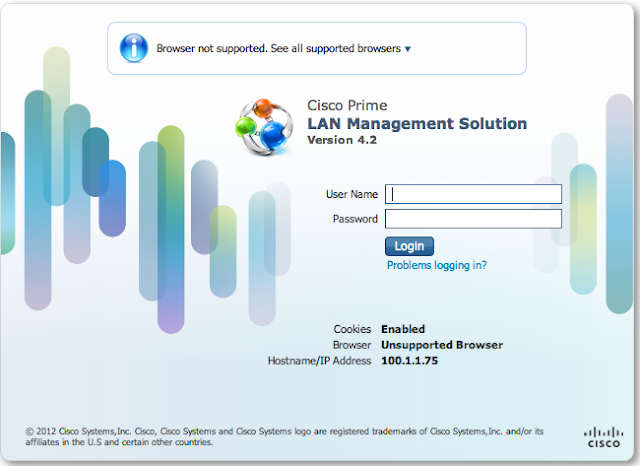
    Cisco Prime LAN Management Solution (LMS) delivers powerful network security management by simplifying the configuration, administration, monitoring, and troubleshooting of Cisco networks. 

    Cisco Prime 4.1

    This innovative solution offers end-to-end security management for business critical technologies and services, such as, medianet, TrustSec, and EnergyWise. Cisco Prime LMS 4.1 improves the overall user experience, providing new workflows that are built on functional partitioning and that align the product with the way network operators do their jobs.

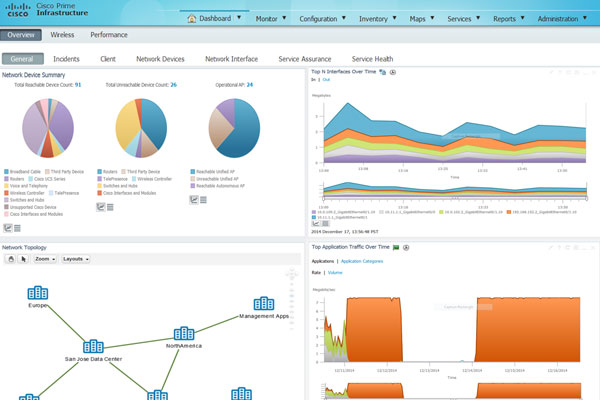
    Once installed, prepackaged security and troubleshooting dashboards provide actionable information to quickly isolate and fix network problems before they affect services.

    Configuring and deploying updates to the network has never been easier with the Template Center, which now incorporates Cisco Smart Business Architecture (SBA) templates that are based upon Cisco Validated Designs, simplifying platform and technology rollout and reducing the chance for errors.

    Work Centers provide a single area where guided workflows give step-by-step instructions to help operators quickly provision, monitor, and manage new Cisco value-added technologies and solutions, such as medianet, EnergyWise, TrustSec/Identity, Auto Smartports, and Smart Install.

    Download Cisco Prime 4.1 
  • Скачать CiscoWorks • Скачать Cisco Prime LAN Management Solution 4.1 для Windows

    Скачать CiscoWorks • Скачать Cisco Prime LAN Management Solution 4.1 для Windows

    Пакет CiscoWorks LAN Management Solution (LMS) содержит набор средств управления, необходимых для упрощения развертывания, администрирования, мониторинга и диагностики различных кампусных инфраструктур от Cisco.

    CiscoWorks LAN Management Solution

    Используя общие централизованные системы и сведения о сети, CiscoWorks LAN Management Solution предоставляет уникальный набор функций, позволяющих снизить время развертывания сети и расходы на администрирование.

    Основные свойства Cisco LMS:

    • Надежный набор средств уровня 2 для обнаружения устройств и подключений, детализированной визуализации топологии, настройки услуг уровня 2 и отслеживание оконечных станций, облегчающее настройку, управление и понимание физической и логической сетевой инфраструктуры.
    • Представление сетевых устройств на основе графического пользовательского интерфейса с отображением в реальном времени динамических данных о состоянии позволяет упростить диагностику и устранение неисправностей устройств.
    • Обнаружение неисправностей в реальном времени, функции анализа и отчета, использующие подробные сведения об устройствах и правила поиска неисправностей, основанных на лучших методах компании Cisco.
    • Упрощенные задачи администрирования, требующие меньших затрат времени, и централизованное управление сетью с помощью управления заменой устройств, сетевой конфигурацией и образами программного обеспечения, доступность сети и анализ неисправностей.
    Cisco prime

    CiscoWorks LMS состоит из следующих программных компонентов:

    • CiscoWorks Common Services — базовая платформа, осуществляющая общее управление интеграцией со сторонними системами сетевого управления, контроль административного доступа и сервисами для всего семейства решений CiscoWorks.
    • CiscoWorks LMS Portal — собственно, CMS сайта.
    • CiscoWorks Assistant — появился с версии 3.0, представляет собой набор визардов для первичной настройки компонентов.
    • Resource Manager Essentials (RME) — для управления критичными сетевыми ресурсами через Интернет с использованием web-интерфейса. Предоставляет набор инструментов для поиска и устранения неисправностей в сети, сбора детализированных отчетов, централизованного обновления программного обеспечения и конфигураций устройств, управления и конфигурации VPN, CallManager и др.
    • Internet Performance Monitor (IPM) — для анализа, оптимизации производительности и отладки неисправностей сетевых соединений на основе Cisco IP SLA.
    • CiscoView — графическое средство управления устройствами.
    • MiniRMON — инструмент для работы с RMON и RMON2.
    • Campus Manager (CM) — для обнаружения и управления L2/L3 устройствми, конфигурирования и управления VLAN и ATM LANE, а также определения подключения пользователей и IP телефонов.
    • Device Fault Manager (DFM) — обеспечивает обнаружение и определение причин сбоев сетевого оборудования в режиме реального времени.
    • Virtual Network Management (VNM) — появился с версии 3.2, занимается визуализацией топологии виртуальных сетей и их диагностикой, VRF.
    • Health and Utilization Monitor (HUM) — появился с версии 3.0.1, идёт как Add-On, требует отдельной лицензии. занимается сбором, отображением и мониторингом параметров производительности, уведомлением о превышении пороговых значений. Поддерживает только cisco-устройства, может мониторить до 1000 устройств.

    Все эти компоненты имеют свою нумерацию в рамках конкретной версии LMS, скачать Cisco Prime LAN Management Solution 4.1 для Windows

  • Why the Russian Hackers strikes back

    Why the Russian Hackers strikes back

    The Russian Federation holds an interesting, albeit a dubious position in the ranks of nation state cyber-actors. While ranked third among countries in terms of volume of cyber activity (behind the U.S. and China, according to Deutsche Telekom’s honeypot network data), Russia is widely regarded as a having the most sophisticated and skilled hackers.

    BGP MiTM attacks are common in Putin's Cyber Union

    Unlike the Chinese government which employs thousands of hackers in the People’s Liberation Army, the Russian government’s relationship with resident hackers is much murkier. The trails to cyber-attacks originating in Russia tend to end at civilian hacktivist groups and criminal organizations, perhaps providing officials with plausible deniability. This may suggest an implicit support for criminal hackers in Russia, given government’s notorious reputation as being inherently corrupt.

    Given the highly publicized industry hacks attributed to Russian entities, it’s easy to conclude that the government’s motivation behind hacking is directly related to financial gain. But that conclusion is, perhaps, somewhat simplistic. As an alternative, consider viewing Russian hacking through the prism of geo-politics. It is feasible that the Russian government has established an iniquitous partnership with Russian civilian hackers to achieve geo-political goals. It may not be possible to know with certainty what motivates the government to participate in nefarious cyber activity, but it’s equally conceivable that Russian officials views hacking, or more appropriately cyber warfare, as a political tool which, when employed, is extremely effective at helping a nation state achieve a geopolitical goal.

    The notion that the Russian government is willing to use the cyber domain as a political, if not military, arena is not new. Recall the cyber-attacks alleged to have been orchestrated by the Russian Government during the 2008 Russo-Georgian War, a war considered by some to be the first cyber-war. Post war analysis suggests that the Russian Government leveraged the vast network of civilian cyber actors, including organized crime organizations, to conduct the attacks. The military significance of the cyber-targets attacked during the war, and the synchronization of the attacks with Russian military operations may be too coincidental to reasonably conclude Russian civilian hackers were acting autonomously.

    In December 2014, the German Federal Office for Information Security (BSI) disclosed that a cyber-attack was executed on a steel plant, resulting in the abnormal shut down of a large blast furnace and associated systems. The BSI report characterized the attackers as highly skilled, and that they used social engineering and extensive knowledge of the network to circumvent security and specialized software designed to prevent such attacks. It is difficult to identify with certainty the parties responsible for these attacks, but the timing of diplomatic talks between the Ukraine and Germany point toward the Russian government. This cyber-attack is significant because it signals an escalation in tactics, a willingness to create physical damage to infrastructure.

    More recently, the shutdown of German Government websites, which overlapped with a scheduled meeting this month between German President Joachim Gauck and Ukrainian Prime minister Arsney Yatseniuk, strongly suggests a connection between cyber operations conducted by Russian hacker groups and Russian politicos. The Russian hacktivist group, CyberBerkut, claimed responsibility for the attacks and demanded the Germans withdraw support for Ukraine. We can’t be certain that CyberBerkut was sponsored by the Russian government, but the timing of the cyber attacks with Russian activity in the Ukraine is compelling.

    The renowned German military theorist Carl von-Clausewitz believed war to be a political instrument, and we can easily extrapolate Clausewitz’ thought to cyberwar in a modern context. With that point in mind, the Russian government has applied Clausewitz’ theories to achieve national political goals by leveraging an increasingly sophisticated hacker population. While the U.S. and many of her allies grapple with the implications of conducting offensive cyber operations, the Russian Government is writing the first book on geopolitics and global cyber warfare.